A practical framework to help you identify emotions, understand needs, and cultivate wiser, more intentional relational choices
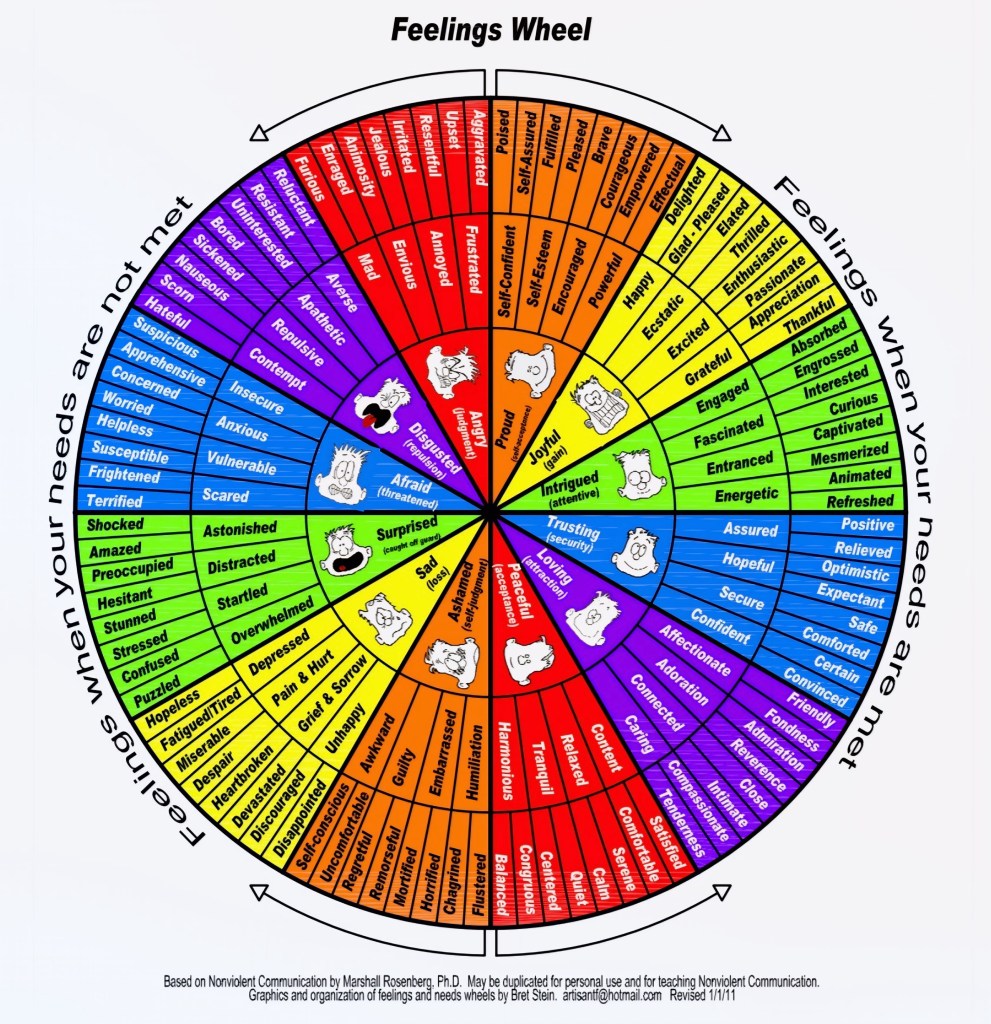
Use this Feelings Wheel, along with the questions below, as a practical framework for emotional self-assessment. As you identify your emotions, thoughts, and underlying needs, observe how these internal experiences influence your behavior, shape your relationships, and support the development of greater emotional awareness and intentional change – Dr. Ken McGill.
1. Identify Your Primary Emotion
Your Primary Emotions are located in the center of the Feelings Wheel. What primary emotion(s) are you currently experiencing?
2. Notice Your Secondary Feelings
Primary emotions may trigger Secondary Feelings, found in the middle and outer parts of the Wheel. Is there a secondary feeling you’re experiencing? What feelings are you identifying?
3. Examine the Thoughts Behind the Feelings
Secondary feelings are often influenced by the thoughts you tell yourself about your situation or the people involved. What thoughts are triggering your secondary feelings?
4. Identify the Need Beneath the Emotion
Considering the emotions, feelings, and thoughts you’ve identified, is there a need or expectation connected to what you’re experiencing? What is it?
5. Clarify Personal Responsibility
What personal responsibility or actions will you take to meet or satisfy your need? What choices do you see yourself making? How might your emotions, feelings, and thoughts shift as you take responsibility for meeting your own needs?
6. Consider Reasonable Requests for Support
You may need assistance from another person connected to your emotions, feelings, or thoughts. What “reasonable assistance” would you like to request? How might your internal experience change if another person partners with you to meet your needs?
7. Share Your Emotional Awareness (3–4 Minutes)
In 3–4 minutes, share these seven insights based on your self-awareness:
- My Emotions: “I have this sinking feeling in my gut; I’m feeling afraid right now.”
- My Feeling: “I’m feeling anxious about what you said and insecure because I may not do this correctly.”
- My Thoughts: “I’m worried and pressured that you’ll be upset with me and I’ll never satisfy you.”
- My Need: “I need patience and understanding; I’m not trying to frustrate you.”
- My Responsibility: “I’ll talk about my fears sooner instead of stuffing or ignoring my feelings.”
- My Request: “Will you sit down with me tomorrow so we can plan what we’ll do?”
- Our Outcome: “I’m feeling relieved and hopeful we’re working together on this.”
8. Choose the Feelings You Want to Cultivate
Which emotions or feelings on the Feelings Wheel would you like to experience more often? Remember, sharing your thoughts, making intentional choices, meeting needs, and working toward “win-win” relationship outcomes strongly influence how you feel.
9. Identify Helpful Processes and Thought Shifts
What practices (deep breathing, taking a time-out, walking, praying, listening to music, sitting quietly, etc.) and what thought adjustments (challenging automatic negative thoughts, integrating affirmations, using communication tools) will help you move toward the feelings and outcomes you desire?
10. Reflect on Communication and Emotional Safety
What feelings do you experience most often? Which are easier to share with others, and which are more difficult? Which emotional states create a safe environment that keeps you and your partner at the table of communication to foster understanding and resolve problems?
Bonus Reflection:
As you conclude this exercise, take a moment to notice what it feels like to “come to your own assistance” by identifying the messages embedded within your emotions, feelings, thoughts, and needs. Consider how this Adult work strengthens your capacity to make intentional choices and create healthier relational outcomes. As an ongoing practice, return to the Feelings Wheel and, when appropriate, invite your partner, children, co-workers, or others to use it with you as a shared framework for increasing emotional awareness, clarity, and meaningful communication – Dr. Ken McGill.
Dr. Ken McGill, LMFT provides attachment-focused therapy for individuals and couples, integrating psychology and spiritual formation, including attachment repair for couples, faith-integrated cognitive-behavioral therapy, and healthy adult mode schema therapy with his clients. Telehealth is available statewide in California and Texas, with in-person sessions in Plano, TX. To learn more or schedule a session contact Dr. McGill at www.drkenmcgill.com or drkenmcgill@live.com.
 drkenmcgill.com