As you enter 2026, I encourage you to ask yourself, reflect on, and then provide a behavioral response to these four questions each day. Asking myself these questions, and responding with intentional behavior, helps me stay focused on what is important and valuable in life, and clarifies how I wish to purposefully use my energy each day.
The questions are (as displayed in this visual):
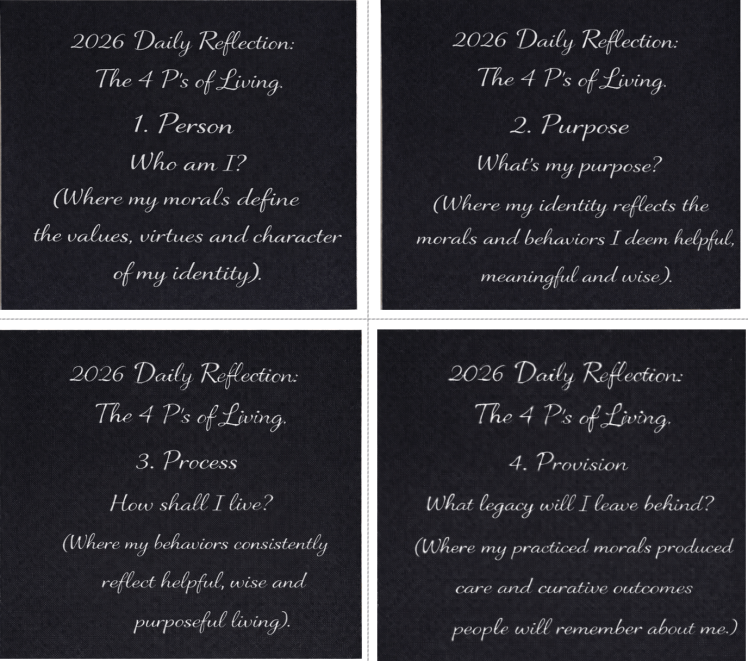
Interestingly, these questions, and my responses to them, line up with Erik Erikson’s virtues found in the final four stages of his Eight Stages of Psychosocial Development model, which span from approximately age 13 through age 65 and beyond. The four reflection questions, the corresponding virtues of each stage, and my responses to those questions are as follows:
1. Who am I? Stage Five (Identity vs. Role Confusion, ages 13–19; virtue: Fidelity): I want my identity to reflect and demonstrate fidelity to the prosocial values and virtues that are part of my value system, such as love, empathy, understanding, esteem, respect, peace, care, and safety.
2. What is my purpose? Stage Six (Intimacy vs. Isolation, ages 20–35; virtue: Love): I want my identity, actions, life, relationships, and encounters to be seasoned with love, because love is the best use of my energy.
3. How shall I live? Stage Seven (Generativity vs. Stagnation, ages 36–65; virtue: Care): I want my actions to consistently and skillfully reflect the virtue of care for my family, my work, and with anyone I encounter within the global community on my life journey.
4. What legacy will I leave behind? Stage Eight (Ego Integrity vs. Despair, age 65+; virtue: Wisdom): I want my legacy to reflect that I lived as a wounded healer, rather than an unhealed wonder.
What are your responses to the reflection questions? As you start 2026, I encourage you to live out your responses one wise decision and activity at a time! Happy New Year to you!
This “Wisdom that Sticks” message is based on a Wisdom Tool in Cultivating Love: Wisdom for Life, by Dr. Ken McGill
 drkenmcgill.com